Learn
Start with a guided route
Compare skulls, teeth, and diet in a short observation activity built for curious visitors.
Start learning
Digital Museum
A focused digital museum of animal osteology, comparative anatomy, and anatomical preservation.
Explore skulls, teeth, limbs, teaching models, and preservation methods through a growing digital catalog built for public science education.
A public education project by Anatomical Stewardship Group. Educator? Join the resource waitlist.
Public Beta · Version 1 Digital Catalog
Current records are interpretive digital teaching records, not claims of physical ownership unless explicitly stated.
Version 1 Digital Catalog
Anatomy Steward is currently in its first public version. Many records are interpretive digital teaching records rather than physical accession records. The catalog will grow through reviewed sources, educator feedback, public references, and careful documentation.
Field Wiki
The Anatomy Steward Wiki explains the terms used across the museum: dentition, mandible, orbit placement, source type, rights status, preservation, interpretation, and teaching use.
Use it as a reviewed field guide while reading object records, exhibits, and classroom activities.
Choose Your Path
Learn
Compare skulls, teeth, and diet in a short observation activity built for curious visitors.
Start learningTeach
Preview worksheets, object study guides, and classroom-ready collection activities.
View educator resourcesContribute
Suggest a teaching object, collection lead, or documentation record for review.
Contribute a leadMuseum Statement
Anatomy Steward begins with careful looking: a tooth surface, a jaw angle, a vertebra, a wing bone. These objects are not displayed as curiosities. They are teaching records that help visitors notice structure, function, adaptation, preservation, and responsibility.
The museum grows through documentation, not spectacle.
Start with one question
Look at teeth
Sharp, flat, mixed, or specialized?
Tooth surface is often the fastest way to begin a diet comparison.
Look at eye placement
Forward, lateral, or somewhere between?
Eye placement may suggest sensory priorities, but it should not be used alone.
Look at jaw shape
Deep, long, grinding-oriented, or slicing-oriented?
Jaw form and tooth surface work together in feeding interpretation.
3-Minute Museum Route
In three minutes, compare teeth, jaw shape, and eye placement. The goal is not to identify a species. The goal is to practice careful anatomical observation.
Object Study of the Week
Try this: find the sharpest teeth, look at jaw depth, notice eye socket orientation, and write one cautious interpretation.
Journal
Short museum notes on object studies, catalog updates, research progress, and educator resources.
Research Note
How Anatomy Steward uses a public research queue to show what topics, objects, and references are being developed.
Object Study
A short object study that invites visitors to look at tooth shape, jaw depth, and eye socket orientation before making a cautious interpretation.
Educator Note
A short educator note introducing the free 3-Minute Skull Observation Mini-Sheet.
Start with a small set of teaching records designed for observation and comparison.
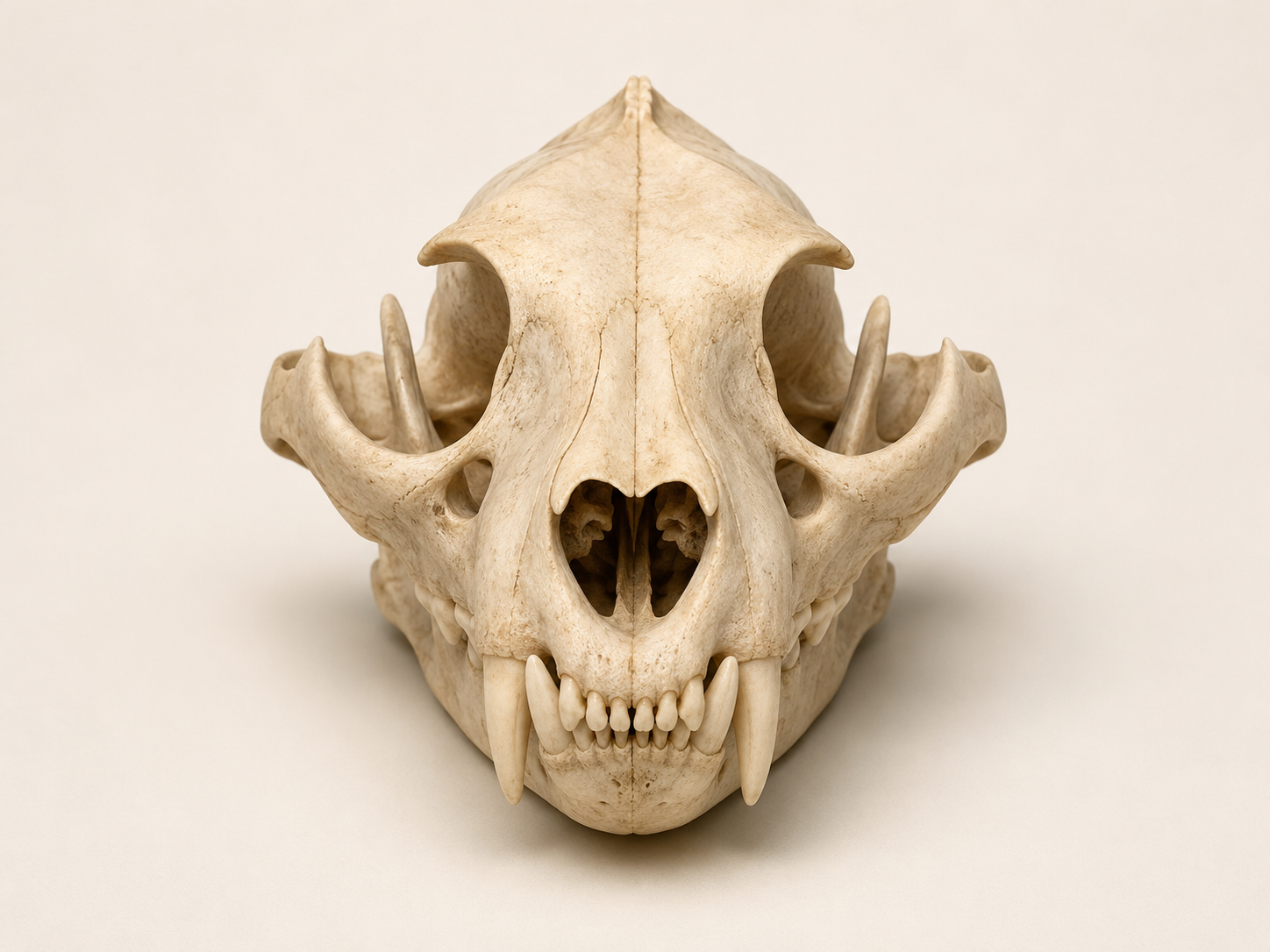
Interpretive digital teaching record
A representative teaching record for comparing teeth, jaw form, and eye placement in carnivoran-type skull interpretation.
Observation Prompt
Which teeth look designed for gripping or slicing?
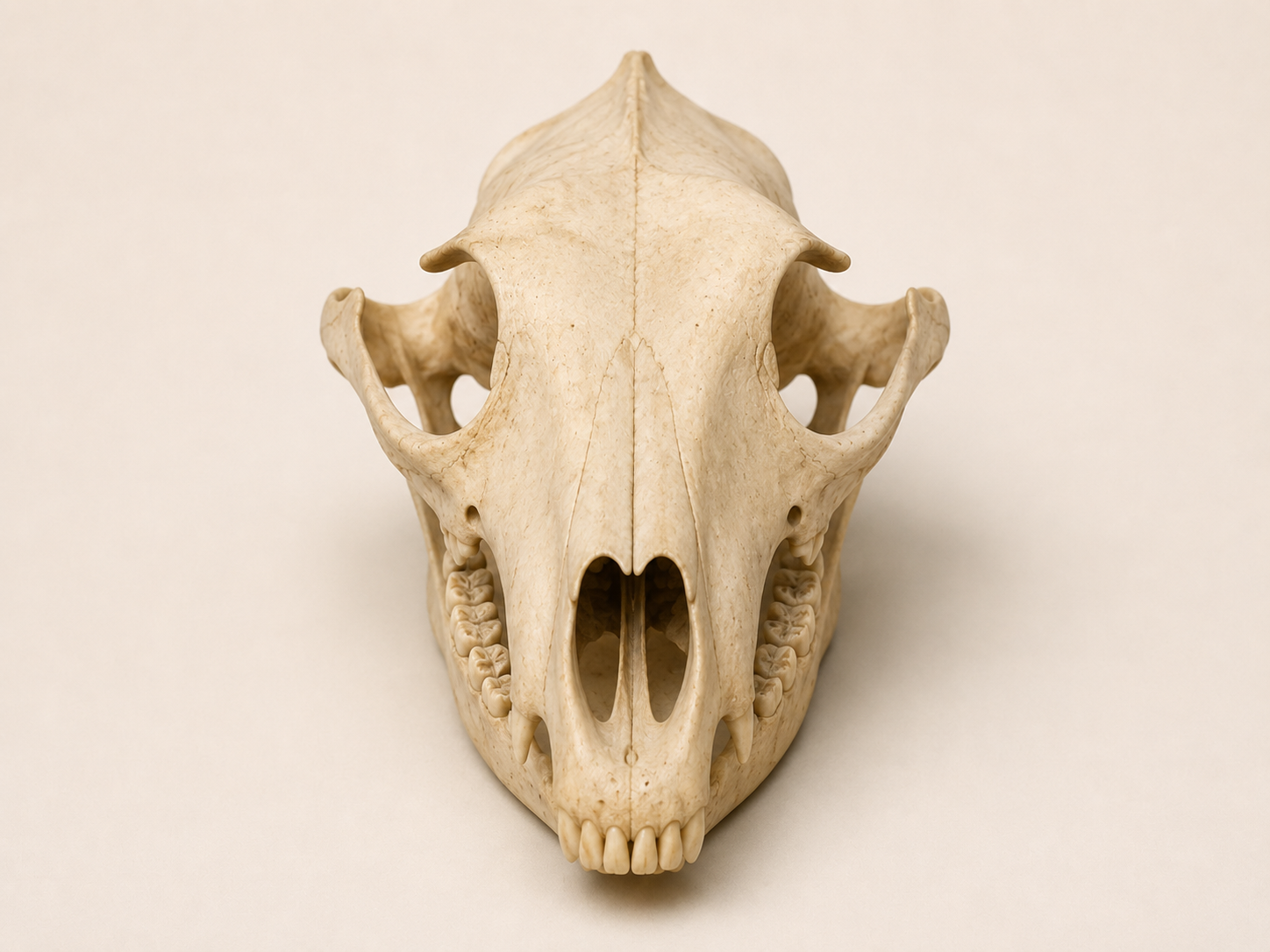
Interpretive digital teaching record
A representative teaching record for comparing grinding surfaces, jaw form, and lateral eye placement in herbivore-type skull interpretation.
Observation Prompt
Which surfaces look designed for grinding?
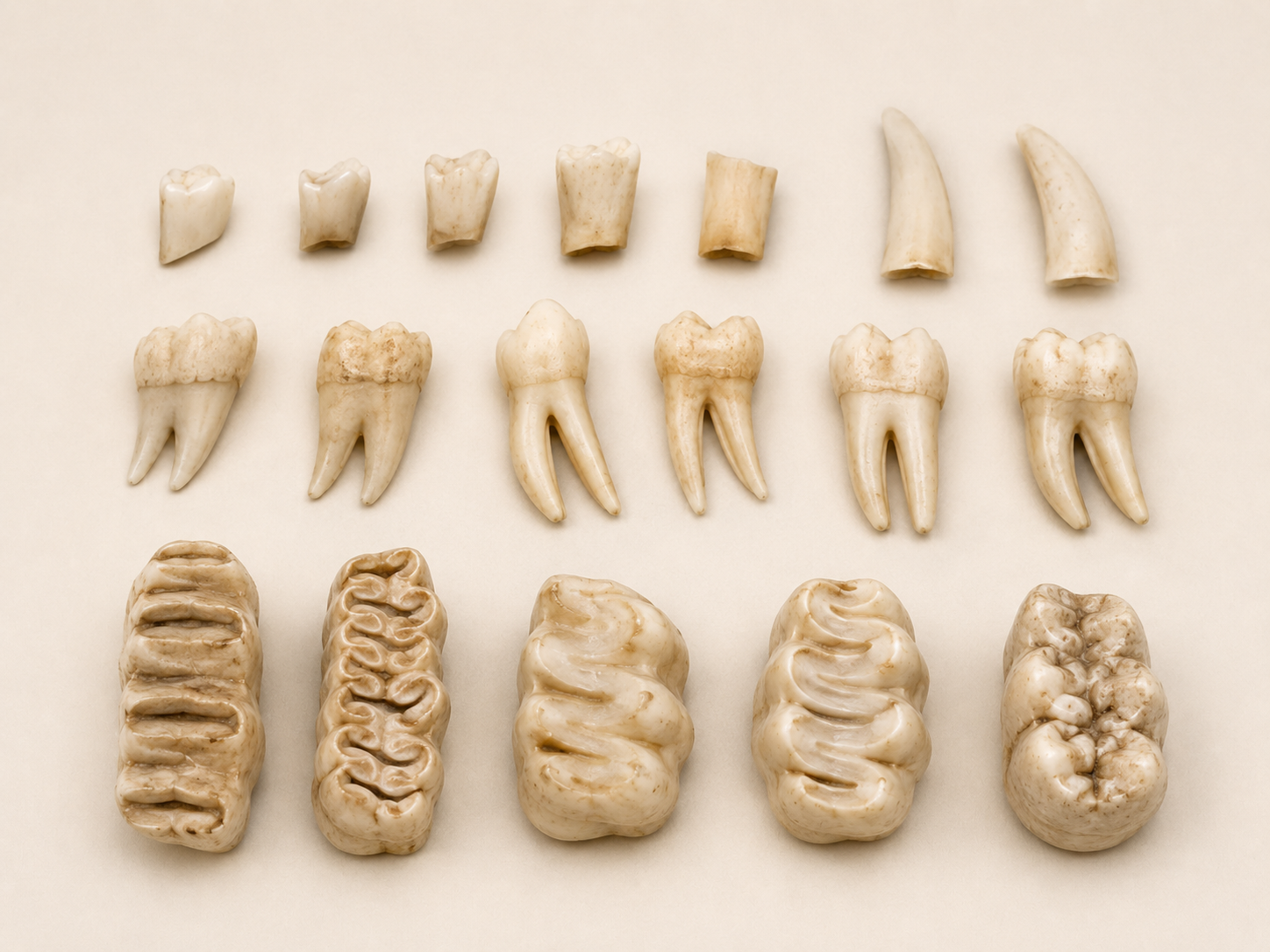
Interpretive digital teaching record
A teaching record for comparing tooth types as tools for cutting, gripping, tearing, crushing, and grinding.
Observation Prompt
Choose one tooth type and describe what it might do.
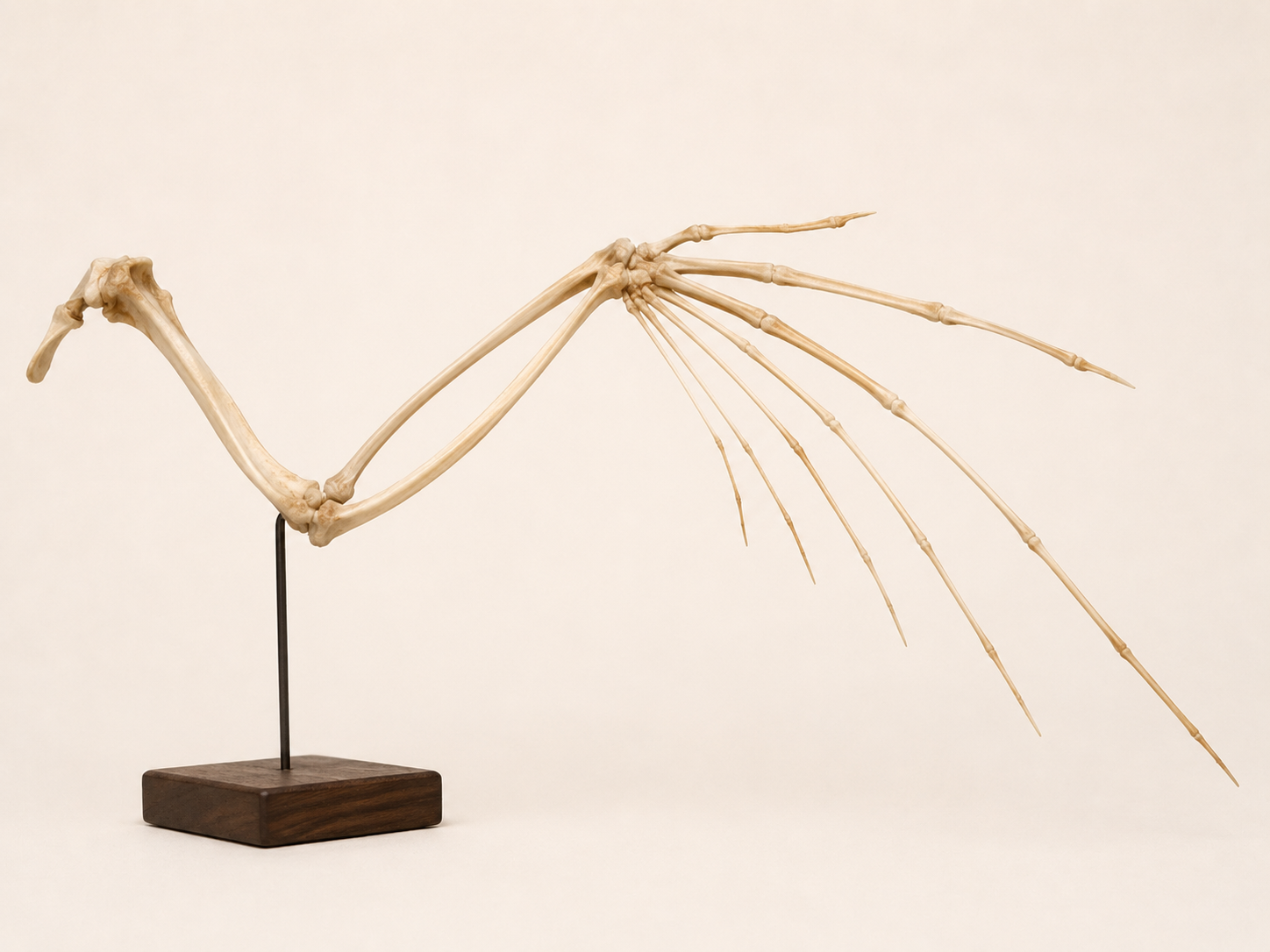
Interpretive digital teaching record
A teaching record showing how a vertebrate forelimb can be modified for flight while retaining shared structural relationships.
Observation Prompt
Which bones still resemble a forelimb?
Growing Museum
Anatomy Steward is not a finished catalog. It grows through careful object notes, teaching-use examples, public references, image leads, and documentation clues contributed by educators, collectors, museums, students, and curious visitors.
Know of a teaching skeleton, skull model, historical chart, slide set, or preservation container that deserves better documentation? Send a careful lead.
Tell us how an object is used in a classroom, lab, museum, homeschool setting, or public education program.
Notice a missing source, unclear term, better reference, or safer interpretation? Help us refine the catalog.
Guided digital exhibits connect anatomical form with observation, comparison, preservation, and teaching use.
Exhibit 01
Digital Exhibit
A comparative osteology exhibit on how teeth, jaws, and eye placement can support cautious interpretation.
Enter exhibit →Exhibit 02
Digital Exhibit
An exhibit on limbs, wings, joints, and skeletal adaptation for movement.
Enter exhibit →Exhibit 03
Digital Exhibit
A museum-style introduction to preservation methods, documentation, and display context.
Enter exhibit →Exhibit 04
Digital Exhibit
How teaching objects become educational through labels, records, interpretation, and repeated use.
Enter exhibit →Preservation & Stewardship
A teaching object is not just something to look at. It needs a record, a label, a source note, a sensitivity level, a display context, and a reason to be shown.
Participate Carefully
Anatomy Steward grows through careful documentation, object histories, teaching use notes, and responsible collection knowledge.
If you know of a teaching object, classroom collection, skeletal model, preservation container, historical anatomy chart, or educational specimen record that deserves better documentation, we welcome careful inquiries.
We are especially interested in information that helps explain how anatomical teaching materials are made, used, stored, labeled, interpreted, and preserved over time.
Educator Resources
Planned resources include skull comparison worksheets, teeth and diet activities, object record templates, and teaching collection checklists.
Join the waitlist to receive printable worksheets, object observation guides, catalog templates, and digital exhibit updates.
Planned resources
If the embedded form does not load, open the waitlist directly. Open Waitlist Form